 Member Benefits
 How to Join
 En Espanol
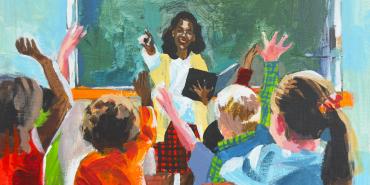
Over the last 20 years as an educator, I have relied on critical self-reflection to better understand my professional journey and better serve my students. Throughout the years, I taught in a handful of districts and states before making the leap into the collegiate space as a professor of teacher education. Through reflection, I realized that the obstacles and challenges that I’ve endured over the years largely center on being a Black female educator working in predominantly white spaces—and they mirrored many of the experiences that I had as a student.
For most of my student experience, I was often the only Black student in the classroom. At an early age, I learned that the curriculum I encountered at school was not designed for me. I rarely saw characters who looked like me in the stories we read, and my most vivid memories of seeing small inclusions of Blackness were of historical accounts often related to slavery or the civil rights movement. The Black excellence that I encountered in my home life and celebrated in personal spaces was never reflected in the curriculum or in school settings. The Black language that many of my relatives spoke was always deemed incorrect and not proper. Essentially, I did not see my lived experiences validated at school. The subtle marginalizations of Blackness throughout my schooling made me feel small, if not invisible. And what was reinforced to me more than anything else during these formative years was that I was different. The weight of being different and marginalized in school was an invisible backpack I carried with me each day. With each year that passed, that backpack became heavier and heavier.
As a novice educator, I wrongly assumed that going from student to teacher would automatically eradicate many of the adverse experiences I’d had as a student. But I quickly found that being marginalized and racialized in educational spaces was not unique to my student experience. I also assumed that the obstacles and barriers I encountered stemming from my identity as a Black educator were unique to a specific space or place. But as I moved across different educational spaces, I had similar adverse experiences. Despite the success I had with my students, the weight of these challenges was heavy on my shoulders and at times caused embarrassment and shame. I often questioned why I had a very different experience than my colleagues, which fueled me to push myself beyond my limits to be better and to reinvent myself over and over in pursuit of acceptance. But the problem was never really my ability to do my job, so my efforts at self-improvement did not yield acceptance, but rather burnout and fatigue.
For years, both as a student and educator, I believed these experiences were my unique burden. But when I moved into the higher education space to work with preservice and novice educators, I began to see that educators who looked like me were encountering very similar challenges. This shifted my thinking in profound ways because it demonstrated that these adverse experiences were common among Black educators. Admittedly, I found a strange comfort in this epiphany, in that I was no longer alone in carrying this weight. But the revelation also sparked a fire in me to unpack what it means to be a Black educator and student in America.

Unpacking the Cycle of Harm to Black Students and Educators
Through my inquiry work as a teacher educator, I began to better understand what was so desperately needed in my own student experience: In not ever having a Black educator throughout my K–12 schooling, I had lacked a cultural match, someone who could affirm my ways of being and illuminate my feelings of marginalization. I came across research that strongly demonstrates that Black educators are more likely to utilize culturally responsive practices, largely influenced by their own student experiences, and that they often serve as “cultural brokers.”1 I immersed myself in research and literature that examined the ways Black educators reduce language policing and disproportionate disciplinary referrals through their shared understanding of cultural and linguistic ways of being.2 It is because of these culturally affirming experiences that having a Black educator even for just one year in elementary school yields higher graduation and college attendance rates.3
While it is common in classrooms for Black English speakers to be overcorrected and have their home language deemed incorrect,* Black educators are more apt to not only understand the Black English being spoken but also value and position it as an asset in the classroom. Black educators tend to more readily employ contrastive analysis to demonstrate the differences between Black English and the “language of schooling” than to follow practices rooted in identifying supposed wrongness in language usage.4 This turns language encounters into learning opportunities rooted in code-switching rather than a simple policing of language. It is an asset-based pedagogical practice that increases students’ confidence and overall academic success.
Consider also the research on disproportionate student disciplinary referral patterns. Black students are approximately three times more likely to receive disciplinary referrals than white students—and while white students are more likely to receive disciplinary referrals that are objective in nature (e.g., for being tardy), Black students are more likely to receive disciplinary referrals that are subjective (e.g., for being loud and/or disrespectful).5 Relatedly, research indicates that Black students are more likely to have their cultural and linguistic ways of being misinterpreted (often deemed incorrect or disrespectful) and to be disciplined, fueling the school-to-prison nexus—but the root of these discrepancies is cultural dissonance in educational spaces across the nation.6 The shared cultural ways of being between Black educators and Black students often avoids such harmful misunderstandings.
In my inquiry work, I also identified a connection between the Black educator and Black student experiences that is less discussed and is deeply rooted in the cycle of harm that occurs among these two populations. At the core of this cycle of harm sits the marginalization and lack of inclusion of Blackness and Black excellence, which often leads to feelings of isolation, self-doubt, and fatigue. While having these experiences as a student inadvertently prepared me for what I would face as an educator, they often serve as deterrents for Black children who aspire to become educators or who want to thrive in classroom spaces. These exclusions are some of the strongest currents fueling the cycle of harm that Black educators and students experience.7 Feeling unseen or not valued perpetuates the diversity crisis in the educator workforce and the opportunity gap in Black student academic achievement. Through unpacking this cycle of harm, we can better understand the mistakes we’ve made and collectively work to provide better experiences for Black students and educators alike.8
While it is clear that all students—especially Black students and other students of color—benefit from a teaching force that more proportionately reflects their increasing diversity in classrooms,9 recruiting Black educators and other educators of color is just one piece of this complex puzzle. Recruitment efforts cannot be rooted in superficial notions of representation; they need to come with deep understanding and culturally affirming support. Furthermore, it is critical that all educators understand the elements of culturally responsive and sustaining pedagogical practice so they can best support their respective students. We can all collectively consider how to rethink our curriculum and pedagogical practices to create more welcoming and inclusive classrooms that provide our Black students and other students of color space and agency to be more deeply engaged in learning, yielding high academic success and improved outcomes.

Empowering Students with Culturally Responsive and Sustaining Pedagogy and Curriculum
Since the early ’80s, we have seen waves of research grounded in culturally relevant, culturally responsive, and culturally sustaining pedagogical practices. Each of these frameworks builds upon its predecessor to more finely attune the practice of getting to know our students in meaningful ways so that we can improve our instructional practices and effectiveness. But while many educators recognize these terms and have some idea what they encompass, our educational system has implemented them in a largely superficial way. As a first step toward deeper implementation, let’s take a quick look at the research behind these practices.
Recognizing the absence of research grounded in the academic achievement of Black students, in the 1990s the scholar and teacher educator Gloria Ladson-Billings10 studied what elements were necessary to yield high academic performance within a demographic group that was “underperforming”† compared to other groups. She found that academic success among diverse learners required that educators set high expectations for achievement, develop cultural competence, and cultivate students’ ability to understand and critique the world around them. These three tenets became the foundation of culturally relevant pedagogy.
Building on this foundation, researcher Geneva Gay11 introduced culturally responsive pedagogy in 2000 to emphasize deeper cultural connections with students and better meeting the needs of diverse learners. Culturally responsive pedagogy is composed of five key elements: “developing a knowledge base about cultural diversity, including ethnic and cultural diversity content in the curriculum, demonstrating caring and building learning communities, communicating with ethnically diverse students, and responding to ethnic diversity in the delivery of instruction.”12 Culturally responsive pedagogy acknowledges that learning is contextual and that student success requires curriculum and instruction to be situated within students’ cultural and linguistic frames of reference13—which makes the content more accessible and enhances student engagement.
But with widespread implementation of culturally relevant and culturally responsive pedagogy, areas for improvement became apparent. Ladson-Billings critiqued the implementation of her framework, famously stating, “I have grown increasingly dissatisfied with what seems to be a static conception of what it means to be culturally relevant. Many practitioners, and those who claim to translate research to practice, seem stuck in very limited and superficial notions of culture.”14 She chastised state departments, school districts, and educators for distorting the foundation of culturally relevant pedagogy: “The idea that adding some books about people of color, having a classroom Kwanzaa celebration, or posting ‘diverse’ images makes one ‘culturally relevant’ seems to be what the pedagogy has been reduced to.” She strongly criticized superficial practices like taking small elements of popular culture to “hook students, only to draw them back into the same old hegemonic, hierarchical structures.”15
Beginning in the late 1990s, scholar James Banks also critiqued what he called an additive approach to multicultural education—adding culturally relevant materials and instruction to the existing curriculum rather than fully revising the curriculum’s core structure to infuse culturally relevant materials and instruction throughout.16 The subliminal messaging when implementing an additive approach is loud and clear to students: These add-ons are extra and at the discretion of educators to employ if there is time.
If we further unpack why the additive approach is not effective, we get to the heart of the issue: how we define and understand culture. What do we mean when we reference culture in pedagogical practices and curriculum? There is the obvious answer of being aware and inclusive of race and ethnicity, but culture is more than that. Culture encompasses beliefs and values, customs, arts, languages, and norms. And in ways large and small, different settings and institutions have their own cultures, so students may experience several different cultures—such as at home, in school, and on sports teams—every day.
The term intersectionality speaks to the ways various facets of culture and identity can intersect—and can compound advantages or inequities.17 At its core, intersectionality acknowledges the complex, multifaceted nature of culture and identity. Each of us is more than our respective race and ethnicity. We, our identities, and our cultures are shaped by our families, communities, beliefs, genders, sexual orientations, languages, locations, heritages, and other factors. Therefore, when educators employ culturally relevant and responsive pedagogical practices only paying attention to race and/or ethnicity, we miss critical opportunities to connect and engage with our students.
The concept of culturally sustaining pedagogy emerged from concerns raised by Banks, Ladson-Billings, and others.18 This asset-based approach requires that our practices go beyond being relevant and responsive to truly embrace students’ cultures and ensure that their ties to and knowledge of their home cultures are not weakened as they experience and learn about new (e.g., school) cultures. The example I shared above about Black educators accepting Black English while also teaching standard English is a model of culturally sustaining pedagogy. No student should feel that their home language is wrong—they should have opportunities to learn new dialects (and/or languages) while still valuing and using what they speak at home. This is a key aspect that is sometimes misunderstood: The goal is to sustain the home culture while also teaching other cultures—including competence in the dominant (white) culture—and ways of being.19
At the heart of culturally responsive and sustaining pedagogies is the notion that students need to see themselves reflected in the curriculum. They need to be able to activate prior knowledge and find connections between their lived experiences and the new knowledge and skills they are learning. Nearly 40 years ago, literacy professor Rudine Sims Bishop made a compelling argument for the relevance of curricular materials pertaining to the stories and books we read with students.20 She wrote that books could serve as a mirror for students to see themselves and their respective identities and ways of being, a window to see glimpses of the lived experiences of others, and a sliding glass door to immerse themselves in new or familiar experiences. This idea expands far beyond text selection to include all curricular materials and instructional approaches—and it benefits all students, as materials that are windows for some students are mirrors for others.
Pushing Past Superficial Implementation
In my journey to becoming an educator, I observed the educational community at large discuss the school-to-prison nexus, the opportunity gap, disproportionate disciplinary referrals, and other harmful patterns that exist when looking specifically at Black students’ performance and achievement compared to their white peers. With conversations to unpack these harmful patterns often comes discussion of reform efforts intended to empower and uplift Black youth. But what is less discussed is that reform efforts often work to align practices to the dominant (white) culture rather than to meaningfully include other cultures and ways of being. Take, for example, my first teaching experience.
The first teaching position I secured was through a large job fair that I attended in the final year of my teacher preparation program. I will never forget my excitement when a recruiter ran after me and convinced me to visit her table to discuss potential job opportunities. I agreed, followed her back to the table, and began to pull out my résumé. This was the moment I had been preparing for, and I was more than ready to discuss the qualifications that made me a desirable candidate. My elation turned to disappointment as the conversation continually circled back to my Blackness and the district’s desire to diversify its teacher workforce to better match its student population. But my desperation to secure a position outweighed my reservations, and I signed my first teaching contract.
I wrongly assumed that in this position I would be among other Black educators, and I hoped to find the sense of affinity and belonging that I so desperately craved as a student. But that hope vanished when I found that I was the only Black educator in the building, despite the predominantly Black student population. Navigating this space as a new professional, I began to realize that I was encountering some of the same obstacles and challenges that my students were encountering. I was expected to teach a curriculum that did not reflect the cultural values and norms that my students and I shared, and the school’s rules and norms did not affirm our cultural and linguistic ways of being. I believe the assumption made in my hiring was that my presence alone would provide something that was desperately missing from these students’ educational experiences. But I did not have the tools or the support to truly enact culturally responsive and sustaining pedagogical practices, and I was not granted the space or agency to enact change.
Twenty years later, I find joy in working with preservice educators and preparing them to deploy culturally responsive and sustaining practices in ways that meaningfully advance the academic success of all students. One common challenge that we face as our student populations continue to diversify is how to be inclusive of all students’ cultures. I assure my students that when implementing these pedagogical practices, they are not expected to become experts in all cultures and ways of being. This perceived challenge is rooted in the false notion that we need to provide all the tools, resources, and cultural knowledge needed to deploy culturally responsive pedagogies. But that couldn’t be further from the truth. It is more important that we are doing this work alongside our students. While what we bring to the classroom space matters, the magic of this work is rooted in what we invite students to bring.‡
Culturally responsive and sustaining methodology centers the illumination of identity and cultural ways of being and requires that students have, as Gay put it, “free personal and cultural expression so that their voices and experiences can be incorporated into teaching and learning processes on a regular basis.”21 In this way, it becomes critical that all members of the classroom community contribute. That means we need to invite students to be active participants in creating the classroom environment. We need to allow them space and agency to be experts in the things they value and cherish and to co-construct a culturally competent classroom environment. A collective partnership between all members of the learning space can transform the classroom into a dynamic environment for unlimited and engaged learning, sparking curiosity and expanding cultural competence and awareness of self and others—which can in turn boost academic achievement.22
A common question my students ask about culturally responsive and sustaining pedagogical practices is what materials to teach. There is a strong narrative that indicates having diverse materials is sufficient, but this narrative points toward an additive approach. It is static and rooted in materials rather than dynamic and rooted in the interpersonal relationships and shared knowledge that should be cultivated with identity-centered pedagogies. Using a text with a diverse character or celebrating cultural holidays and traditions in the classroom can fall short because these are curricular inclusions, not instructional practices. The dynamic elements and effectiveness of culturally responsive and sustaining practice are rooted in conversations with students about the text (or topic), interpretations of the curriculum, and real-world connections and applications that students make between their lived experiences and the curriculum being explored. Consciously differentiating curriculum from instruction helps us refine our practices.
Lastly, to be effective in our practice, we must start with student identity to enact authentic culturally responsive and sustaining pedagogies, not our preconceived notions of the culture(s) represented in our classrooms. We have to create opportunities for students to bring their full selves into the classroom for exploration and validation. Furthermore, these approaches cannot just be the springboard used to insert students’ cultural wealth into an unchanged, traditional curriculum. Being culturally responsive and sustaining in practice means ensuring that students’ cultural wealth and assets are infused throughout the curriculum and classroom instruction.
Culturally responsive and sustaining practices are not fully effective when we do not create space for critical self-reflection. In conjunction with employing diverse curricular materials, throughout the learning process we should invite students to consider how new knowledge acquired in the classroom builds on their prior knowledge, how their perceptions have changed, and how newly acquired knowledge can be applied in their daily lives and/or the world around them.§ This not only centers students and their identities in learning, it also helps them develop resiliency, empathy, and understanding while encouraging transferability of skills.23
To better illustrate this, I want to share what this looked like in my seventh-grade classroom years ago. When I introduced Monster, the novel by Walter Dean Myers, I started with activating prior knowledge and encouraged my students to consider a time they may have been wrongfully accused of something and how that made them feel. From there, I asked them to think about stereotypes and the preconceived notions that they consciously and unconsciously develop about others. While the prompts I used were not culturally based, the students’ responses were. My students talked about being judged for the color of their skin and the ways they spoke, and they shared how these elements of their cultural wealth were perceived as deficits by those from other cultures. We began to have rich conversations revolving around their thoughts and ideas as they intersected with concepts from the text and with their own lived experiences. These conversations became a foundation not only for us to revisit and revise our thoughts and feelings regarding the recurring themes in the novel, but also for students to build empathy and understanding that they leveraged in their analysis of the text.
While we had tons of fun engaging in this learning process, the real magic was in the conversations. Because students brought their lived experiences into the classroom, they all entered this learning process with empathy and care developed from listening to the experiences of their peers. With that empathy and care, we made our classroom come alive. We questioned the text and the author’s choices, we followed foreshadowing throughout the novel and made predictions, we experienced emotions along with the characters in the story, we engaged in a full mock trial as we put characters on the stand and developed arguments for the prosecution and defense, we wrote newspaper articles as if we were members of the story’s community, and we moved between the storyworld and our own reality, transferring our thoughts and skills between the two spaces. These real-life applications then led to championing social justice change in our school and classroom community.
As I cultivated space for them to deepen their exploration of the text by being curious about the world around them, my students questioned why Black youth are disproportionately represented in the prison system. They wondered about the consequences of stereotypes, prejudices, and police brutality against historically marginalized people. And they delved into America’s legal and justice systems. I invited their inquiry because it fostered engagement and created a rich, dynamic learning experience for all. My students took these wonderings and engaged in research, explored how they could leverage their collective voice to enact social justice change, and became engaged in civic discourse. When identifying how policies and procedures were influenced by stereotypes and prejudices in the storyworld, students became curious to see if they could identify similar trends in their own lives. They began their inquiry by analyzing our school and district policies—policies that they were already familiar with but wanted to analyze critically. While looking for neutrality, they found disproportionate policies hinging on gender and culture, and they began to wonder what the consequences of such discrepancies were. This led to deeper research and inquiry, ultimately moving them to share their thoughts, research, and advocacy for more culturally relevant and inclusive policies in the school newspaper. In this way, we moved beyond simply reading a text and practicing skills; we became a community of active change agents.
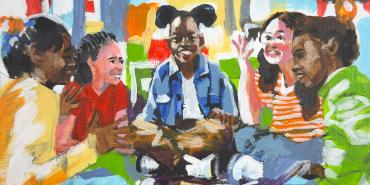
Black youth and other youth of color continually receive subliminal messages that they are not important when we exclude them from the curriculum and do not choose pedagogical practices that invite their contributions. They feel othered when we take an additive approach to curriculum, implementing superficial cultural insertions and celebrations only when time permits. And they believe they do not belong when school and classroom rules, policies, and procedures are exclusive of cultural awareness and understanding. These exclusions lead not just to feeling marginalized, isolated, and fatigued, but also to disproportionate disciplinary actions and slowed progress in academic achievement.
We can no longer simply talk the talk; we need to walk the walk. If we want to ensure high academic achievement for all students, we need to consider those students who are most harmed in school settings and work to eradicate the obstacles between them and their success. For our Black students in particular, that means integrating Black culture and excellence into the curriculum and teaching in a way that highlights how it is an asset for all students. It means acknowledging that while Black English is not the “language of schooling,”24 it is an established, standardized dialect of English. It means realizing that our ways of styling our hair and clothing our bodies are not inappropriate or distracting, but a beautiful representation of our cultural ways of being passed down through generations in our respective families and community at large. Our students need to experience pedagogies that acknowledge and affirm them to allow them to reimagine their future, grounded in academic achievement and success.
Shaylyn Marks is an assistant professor in the teacher education department at California State University, Bakersfield, and a former secondary English teacher. The 2025 recipient of the California Council on Teacher Education’s Outstanding Mid-Career Teacher Educator Award, her work focuses on advancing equitable learning opportunities for underserved student populations. Portions of this article have been adapted from her 2025 book, Diversifying the Educator Pipeline: Supporting Black Educators Through Recruitment, Preparation, and Retention, published by Myers Education Press.
*To learn about African American English, see “Teaching Reading to African American Children: When Home and School Language Differ” in the Summer 2021 issue of American Educator. (return to article)
†The term underperforming is subjective, deficit-based language, but it is purposefully used here to align with language in the field regarding this topic. (return to article)
‡Educators of young children can engage in culturally relevant and sustaining practices by inviting contributions from both students and their families. (return to article)
§This approach supports the development of transcendent thinking as described in “When Students Think Beyond the Moment.” (return to article)
Endnotes
1. R. Kohli, Teachers of Color: Resisting Racism and Reclaiming Education (Harvard Education Press, 2021).
2. K. Daniels, Teacher Workforce Diversity: Why It Matters for Student Outcomes (Duke Sanford School of Public Policy, Hunt Institute, 2022), hunt-institute.org/wp-content/uploads/2022/11/Kisha-Daniels-2.-Teacher-Workforce-Diversity-Why-It-Matters-for-Student-Outcomes.pdf.
3. D. Carver-Thomas, Diversifying the Teaching Profession: How to Recruit and Retain Teachers of Color (Learning Policy Institute, 2018), learningpolicyinstitute.org/media/165/download?inline&file=Diversifying_Teaching_Profession_REPORT.pdf.
4. M. Haddix, Cultivating Racial and Linguistic Diversity in Literacy Teacher Education (Routledge, 2016); and S. Nieto, Affirming Diversity: A Sociopolitical Context of Multicultural Education, 3rd ed. (Longman, 2000).
5. H. Milner et al., “These Kids Are Out of Control”: Why We Must Reimagine “Classroom Management” for Equity (Corwin, 2018).
6. Milner et al., “These Kids”; and L. Delale-O’Connor et al., “Self-Efficacy Beliefs, Classroom Management, and the Cradle-to-Prison Pipeline,” Theory into Practice 56, no. 3 (2017): 178–86.
7. S. Marks, Diversifying the Educator Pipeline: Supporting Black Educators Through Recruitment, Preparation, and Retention (Myers Education Press, 2025); and Kohli, Teachers of Color.
8. Marks, Diversifying the Educator Pipeline.
9. T. Madkins, “The Black Teacher Shortage: A Literature Review of Historical and Contemporary Trends,” Journal of Negro Education 80, no. 3 (2011): 417–27; and R. Noble, “Black Teachers Help Their White Colleagues’ Ability to Teach Black Students, but at What Cost?,” National Council on Teacher Quality, September 25, 2025, nctq.org/research-insights/black-teachers-help-their-white-colleagues-ability-to-teach-black-students-but-at-what-cost.
10. G. Ladson-Billings, “Toward a Theory of Culturally Relevant Pedagogy,” American Educational Research Journal 32, no. 3 (1995): 465–91.
11. G. Gay, Culturally Responsive Teaching: Theory, Research, and Practice (Teachers College Press, 2000).
12. G. Gay, “Preparing for Culturally Responsive Teaching,” Journal of Teacher Education 53, no. 2 (2002): 106–16.
13. Gay, Culturally Responsive Teaching; and Gay, “Preparing for Culturally Responsive Teaching.”
14. G. Ladson-Billings, “Culturally Relevant Pedagogy 2.0: a.k.a. the Remix,” Harvard Educational Review 84, no. 1 (2014): 77.
15. Ladson-Billings, “Culturally Relevant Pedagogy 2.0,” 82.
16. J. Banks, An Introduction to Multicultural Education, 2nd ed. (Allyn and Bacon, 1999).
17. K. Crenshaw, “Demarginalizing the Intersection of Race and Sex: A Black Feminist Critique of Antidiscrimination Doctrine, Feminist Theory and Antiracist Politics,” University of Chicago Legal Forum 1989 (1989): 8.
18. D. Paris, “Culturally Sustaining Pedagogy: A Needed Change in Stance, Terminology, and
Practice,” Educational Researcher 41, no. 3 (2012): 93–97.
19. D. Paris and H. Alim, “What Are We Seeking to Sustain Through Culturally Sustaining Pedagogy? A Loving Critique Forward,” Harvard Educational Review 84, no. 1 (April 2014): 85–100.
20. R. Bishop, “Mirrors, Windows, and Sliding Glass Doors,” Perspectives: Choosing and Using Books for the Classroom 6, no. 3 (1990): ix–xi.
21. Gay, Culturally Responsive Teaching.
22. Gay, Culturally Responsive Teaching.
23. G. Muhammad, Cultivating Genius: An Equity Framework for Culturally and Historically Responsive Literacy (Scholastic Teaching Resources, 2020); and T. Howard, Why Race and Culture Matter in Schools: Closing the Achievement Gap in America’s Classrooms, 2nd ed. (Teachers College Press, 2020).
24. Haddix, Cultivating Racial and Linguistic Diversity, 5.
[Illustrations by Charly Palmer]