 Member Benefits
 How to Join
 En Espanol

When it comes to trade, President Donald Trump is correct that decades of US policy have caused severe damage to many Americans and their communities. A core “America First” pledge by Trump was to end offshoring and bring factories and jobs “roaring” back,1 creating family-supporting jobs for the 62 percent of US adults over 25 without four-year college degrees.2 If that happened, it would boost local tax revenues to support schools and hospitals, and it would bolster our nation’s resilience and safety after COVID-19 supply-chain meltdowns revealed we can no longer make or reliably get essential goods.
But Trump’s chaotic tariff* policy is not delivering more industrial jobs or revitalizing domestic manufacturing. Since his return to the White House, more than 80,000 American manufacturing jobs have been lost, and our manufacturing trade deficit has deepened by $63 billion.3
The Trump administration may be unable to deliver, but the promises candidate Trump made are achievable. We can have a trade policy that:
- prioritizes the interests of workers, consumers, small businesses, and farmers;
- enhances national well-being, resilience, and security;
- increases capacity for American workers to be paid good wages;
- results in more quality goods and services produced in the United States;
- protects the environment and public health;
- balances trade, greatly reducing the trade deficit; and
- diversifies the nations from which we import.
To accomplish all this, strategic, targeted tariffs are an important industrial policy for the US government. But as with any tool, proper use is essential. Trump’s off-and-on, go-it-alone deployment of tariffs—often aimed at the wrong targets and without accompanying domestic investment policies—has been akin to using a hammer to change a light bulb.
Today, far too many people face dead-end, low-wage job opportunities, no chance of owning a home, unaffordable and sometimes unavailable healthcare, and worse prospects for their kids. What happened to the American dream that has drawn people from around the world to our shores? There was nothing inevitable about the economic regime that delivered these outcomes. It was established by a specific set of expansive trade and economic rules implemented globally by international agreements, including the 1994 North American Free Trade Agreement (NAFTA) and the 1995 establishment of the World Trade Organization (WTO). As this article explains, different rules will deliver different results.
Corporate-Led Hyperglobalization
In the late 1980s, hundreds of official US trade advisors,4 mainly representing commercial interests, leveraged their access to trade-pact negotiations (from which the public, press, and even most of Congress were excluded) to shape binding global economic policies to their benefit. With the US government playing an outsize role in the negotiations, the NAFTA-WTO model was designed by and for the world’s financial-service titans and like-minded powers, including Big Pharma, manufacturers seeking to offshore production to lower-wage countries, large retailers, and agribusiness giants. It was pushed as a win for all Americans5 by US Republican6 and Democratic7 presidents alike amid the 1990s neoliberal mania.
While these pacts were branded as “free trade,” they were a radical departure from past trade agreements. Instead of being limited to traditional trade terms, such as tariff cuts and quota expansions, these pacts also imposed one-size-fits-all rules covering nontrade matters.8 Every signatory country was required to make their domestic laws conform to expansive nontrade rules. And unlike labor or environmental treaties, these international rules were enforceable, with noncompliant countries facing trade sanctions unless and until they altered their domestic policies.
These rules are, predictably, anti-environment and anti-working families. They include bans on countries establishing new exclusively public services, requiring certain corporate structures (such as nonprofit status), or enacting certain types of licensing and other standards in specified service sectors. The United States was among the few countries that agreed to have any education services governed by these rules, allowing some aspects of adult and vocational education to be subject to the rules of the WTO’s General Agreement on Trade in Services. This agreement’s overarching purpose is to open all services (including education and healthcare) to private, international corporations and to make the provision of services across borders by private firms as easy as trade in goods. Under it, some educational programs could have standard practices like accreditation requirements declared “trade barriers” and dismantled.9 Fortunately, plans in the late 2000s to expand this to secondary and college-level education10 were defeated by a campaign led by unions and public colleges and universities.11
NAFTA-WTO rules also forbid many forms of financial regulation, preventing bans on risky financial products. Ceilings—but no floors—are set for domestic environmental, health, and safety standards. And, in a clever anti-antitrust move, the rules ban service-sector regulation12 based on the size of an entity or how many different services any one entity may offer.13 (Pacts like these are still being developed. Recent ones include “digital trade” rules that undercut governments’ abilities to enforce policies on Big Tech competition, AI oversight, child online safety and data privacy, and security.14)
Signatory nations also are obliged to enact and enforce pro-monopoly policies domestically. This includes extensive intellectual property protections, such as lengthy patent monopolies that raise medicine prices.15 As well, countries are forbidden to enact many of the most effective measures to avoid financial crises and speculative bubbles, such as regulating flows of capital across borders.16
When consumer advocate Ralph Nader dubbed these deals “a slow-motion coup d’état” by corporations against governance and accountability,17 he was attacked as a Luddite and protectionist.18 The campaign criticizing him was funded by powerful commercial interests pushing their agenda through the backdoor of “trade” agreements to achieve what they could not achieve in Congress.19 President Bill Clinton described globalization as a natural unstoppable force.20
That’s far from the truth. In fact, the WTO and NAFTA were just one version of global commercial rules that were shaped to benefit certain interests—and they could be reshaped. Consider that free trade agreements, like NAFTA, included new investor protections that subsidized offshoring. To make it safer and less costly for corporations to offshore production to low-wage countries, the pacts require governments to guarantee investors a minimum standard of treatment and refrain from regulations that conflict with investors’ “reasonable” expectations. Called investor-state dispute settlement (ISDS), this system elevates individual corporations to equal standing with nations by empowering corporations to skirt domestic courts and sue governments before a panel of three corporate lawyers. The foreign corporation need only convince the lawyers that a law, environmental regulation, or court decision violates the special investor rights. The lawyers’ decisions are not subject to appeal, and they can award the corporations unlimited sums to be paid by a country’s taxpayers—including for the loss of expected future profits. Meanwhile, governments cannot sue corporations for bad conduct. More than $100 billion is known to have been paid to corporations and investors by governments in ISDS attacks on zoning laws, bans on toxic substances, minimum wage standards, racial justice measures, mining rules, water and forestry regulations, and more, but settlements in most cases remain confidential.21
WTO rules have also been strongly enforced.22 Tribunals of trade experts could order governments whose laws were determined not to meet WTO dictates to eliminate or alter such policies or face indefinite trade sanctions. For example, as a result of WTO enforcement actions, the United States has rolled back Clean Air Act anti-asthma rules on gasoline contaminants, Endangered Species Act rules on sea turtles, the ban on tuna caught with nets that drown dolphins, and the mandatory country-of-origin labels on meat.23 Today, the WTO’s powerful enforcement mechanism, which has ruled that numerous countries’ environmental, health, and other public-interest policies were illegal trade barriers, has been sidelined after the first Trump administration vetoed the appointment of new tribunalists. But influential commercial interests in powerful countries have been able to enforce many of the old rules through other means, including, increasingly, the second Trump administration’s tariffs and resulting bilateral agreements that double down on terms that favor corporations.
Damaging Results at Home
After three decades, this global “trade” architecture has concentrated industrial production and many services that can be offshored (including engineering, accounting, computer programming, radiology, and back-office operations) in too few places. The rules promote “efficiency” in the form of low prices wrought from low wages and labor abuses, currency manipulation, and mass corporate subsidies. Under these rules, countries with higher standards and wages, and those seeking to raise them, are effectively penalized.
The result is US economic damage, which many Americans have been and are painfully experiencing, along with threats to national security, resilience, and democracy. That multiple US presidents pushed this global commerce regime makes these outcomes especially ugly.
The data are familiar and grim: A large, chronic US global trade deficit has fueled deindustrialization, with more than 70,000 American factories closing since 1995.24 Since NAFTA and the WTO, millions of manufacturing jobs have been destroyed25 nationwide by waves of offshoring and surges of imports—often of US brand-name goods that are no longer made here. Congress’s approval in 2000 of China’s admission to the WTO intensified the damage.26 The growing US trade deficit and increasing job offshoring to low-wage countries have driven expanding income inequality.27 And these policies were pursued despite the fact that economic theory predicts these terrible outcomes.
When towns’ industrial jobs were killed, local restaurants, retailers, and other businesses lost their customers and failed. The tax base that once supported local schools, hospitals, public infrastructure, and other services and related jobs shriveled. “Factory Towns”28 nationwide were crushed along with the families who had built lives around them.†
US policymakers chose to ignore all of this for years. The fallout has been deep and lasting. Today, 59 percent of Americans—about the same as the percentage of the workforce without college degrees—say they cannot cover an unexpected $1,000 expense.29 Working-class Americans have an average lifespan that is eight years shorter than those with college degrees.30 A recent demographic study of areas hardest hit by manufacturing job losses to Mexico following NAFTA shows “lost years” that (after controlling for other factors) the authors concluded were NAFTA-related early deaths.31
Trade policy is not the only cause of these negative trends. But as a policy set by our government, it is a factor that can be shaped.
The rage accompanying this decline has translated directly into politics, with implications for American democracy. Research has documented intense political polarization on a precinct-by-precinct basis where the most severe trade-related damage occurred.32 Similarly, the opinion research conducted through the “Factory Town” project of medium-sized cities nationwide showed why driving through once-thriving manufacturing communities in New York, California, and Texas, one will meet the same decay, despair, and rage that are shifting the politics of Wisconsin, Pennsylvania, Ohio, and Michigan.33 These cities once provided economic security for American workers without college degrees, but as factories left, whole communities withered.
Then the COVID-19 crisis happened, and millions of Americans who previously had felt immune to the downsides of corporate-led hyperglobalization were awakened to the threats of our current trade regime. In the most powerful country in the world, we realized in 2020 that we no longer produced the essential goods that keep our families safe, nor were there diverse import sources on which we could rely.34 This unifying shock made evident what US military planners have long warned: We have become dangerously over-reliant on importing key goods from too few countries.
America has even become a net food importer, with agricultural trade deficits in four of the last six years.35 We export raw commodities of soy, corn, and wheat and have become increasingly reliant on imports for the food that we eat, including up to 90 percent of seafood,36 about 60 percent of fruit, and more than a third of vegetables.37 The rigged trade rules mean that for soy, the United States is both the world’s second largest exporter (51.2 million metric tons)38 and a major importer.39 Consider the climate disaster of ships brimming with soybeans spewing carbon as they pass each other on the seas. Who benefits from this madness? A small number of multinational commodity firms profiting by paying farmers in the United States, Brazil, and elsewhere less while controlling sales to the United States, China, Japan, and other countries to maximize margins.
Despite the many constraints on countries’ domestic policies imposed by the WTO, NAFTA, and similar agreements, they included no discipline against trade-distorting tools that lead to chronic imbalances, including currency manipulation, wage and consumption suppression, and some forms of subsidy that fuel overproduction. For example, countries can lower their currency values to boost exports. Imported goods priced in undervalued currencies now often enjoy enormous advantage in the US market relative to even the most efficient domestic producers. As well, during the 1970s, newly formed transnational corporations pushed key countries to “liberalize” their investment regimes. That meant US brand-name corporations could more easily move production to low-wage countries.
Over time, the US trade deficit with the world deepened, as offshoring expanded into the most sophisticated manufacturing sectors. Consider solar. Solar energy was a US innovation. In the 1990s, we produced one-third of all solar equipment worldwide.40 But by 2015, after decades of predatory trade practices by China and other countries (combining currency devaluation, large industrial subsidies, and other practices), the United States produced almost no solar equipment.41 Today, 80 percent of solar equipment production occurs in China.42
That example—repeated in the case of computers, microchips, and many other innovations—gives a glimpse into why the United States had an almost $1 trillion trade deficit by 2022.43 It also points to another problem: As US job offshoring to China and India has moved up the wage scale, to highly skilled manufacturing jobs and even to professional jobs, US workers now lose more from reduced wages than they gain from cheaper imported goods, as the father of modern trade economics, Nobel laureate Paul Samuelson, showed in a 2004 paper.44
In short, our longstanding trade regime has become a bad deal for most Americans.45
Damaging Results Abroad
Perversely, the countries that have done the best under this corporate-friendly system are those, like China, that have found ways to evade its rules.46 Countries in Latin America and Africa that adhered most closely to the entire neoliberal policy package saw their growth rates slow and income inequality increase.47 Many also became net food importers and subject to serial food-price crises, as WTO rules forbid certain forms of support for small farmers but allow export subsidies.48 Some countries in Asia, including China, bent WTO rules to spend heavily on subsidies. They developed industrial sectors that paid low wages—but relative to the grinding rural poverty that millions of Chinese people were enduring, they provided real gains. But well after China and other Asian nations grew into world-class manufacturers, their governments’ subsidies continued to expand and currency manipulations continued. These nations also grew significant chronic trade surpluses with the world.
Today, global trade has become so imbalanced and production so concentrated that fewer than 20 nations, mainly in Asia and Europe, have large chronic global trade surpluses (unrelated to exports of oil or other natural resources). China’s is the largest at $1.2 trillion.49 A recent International Monetary Fund report called on China to reduce its subsidies, warning that its overproduction was distorting trade worldwide.50 But some other nations’ average current account surpluses relative to their GDPs in the past decade are also sizeable: 7 percent for Germany, 3.5 percent for Japan, 4.2 percent for Korea, and 25 percent for Taiwan (according to calculations made by Rethink Trade staff). As many of the chronic trade-surplus nations flood the world with huge volumes of goods of all types, more countries have joined the United States in having chronic global trade deficits.
The tragedy of this story is that trade imbalances hurt regular people in both surplus and deficit nations. Many people are aware of the damage caused by chronic trade deficits. But people in nations with chronic trade surpluses, such as China, often face suppressed wages, meager social safety nets, undervalued currencies, and other troubles. This tradeoff might be acceptable for developing countries seeking to kickstart domestic industries. However, when large, industrialized nations keep depending on foreign markets to absorb production surpluses, imbalances begin to build up and generate destabilizing effects. Now, large middle-income nations like Brazil, India, and Turkey are facing deindustrialization pressures and, as a result, have enacted tariffs against Chinese imports.51
As if all this weren’t bad enough, millions died needlessly during the COVID-19 pandemic because of the WTO’s overreaching, corporate-rigged “trade” rules. European countries with major pharmaceutical industries blocked a proposed waiver to WTO patent monopoly guarantees that was needed to produce generic versions of the best vaccines and treatments.52 It was an extreme display of “trade” rules enforcing the profits-over-people mentality that corporate leaders routinely champion.

Why Trump’s Approach Is Failing
While Trump seized politically on the fallout of this long-simmering trade disaster, his diagnosis of why our trade policies cause so much damage is wrong. Trump says other countries tricked “stupid” US trade negotiators into “bad” deals.53 In fact, Republican and Democratic US presidents alike promoted NAFTA and WTO terms that favored large commercial players. And now Trump is using trade tools—mainly tariffs—to benefit his own political and personal allies54 while also committing tariff malpractice that benefits no one. Indeed, Trump’s second-term trade policy has demonstrated almost every possible misuse of tariffs.
Tariffs have been a common tool to penalize bad trade conduct for decades. Tariffs balance against subsidies and dumping (selling goods for less than what it cost to produce them) that would otherwise wipe out domestic producers. Tariffs are also an important policy tool to create preferences for certain production practices.
For example, if you are concerned about climate change and favor the Carbon Border Adjustment Mechanism that Europe has enacted to reward lower-carbon production, you are for tariffs. If you think it is unfair for US shrimpers, mainly small businesses with one or a few trawlers, to get wiped out by imported shrimp from India, Vietnam, and other countries (produced with subsidies and processed under horrific labor conditions after being grown in unsanitary pools where fecal contamination is countered by antibiotic soup55), then you support the countervailing tariffs now in place against those imports. If you do not want solar panels made by forced labor and believe the United States should also produce this technology that we created, you support tariffs against China’s use of massive subsidies and dumping of such goods (and against Chinese panels being sent through other countries).
But Trump’s chaotic tariff policy has minimized tariffs’ trade-balancing and reindustrialization prospects while doubling down on trade agreements designed to benefit powerful US commercial interests. His tariff overreach helped spur a 6–3 Supreme Court ruling in early 2026 stating that Trump did not have authority under a specific statute, the International Emergency Economic Powers Act,56 which he had used to impose the broadest tariffs covering the most countries. Trump quickly reinstated tariffs using other tariff authorities Congress has provided to presidents for decades.
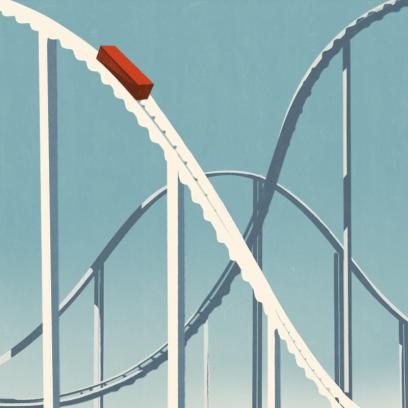
Legalities aside, the first and most fundamental problem is that Trump keeps violating the number one rule of effective tariff use: Tariffs only work when they are predictable and sustained. No company will shift input or retail sourcing, much less invest in new or expanded US domestic production capacity, unless it believes the demand for domestic goods generated by protection will last long enough to earn a return. Trump’s tariff roller coaster—which has included more than 50 major changes in tariff rates, target countries, and excluded goods in one year57—sends the opposite message.
Second, Trump has mistargeted tariffs by using them to benefit himself, his political donors, and politicians he favors in other countries instead of the American people. In his zeal to gild what he calls his “very good relationship” with Chinese leader Xi Jinping,58 Trump cut tariffs on China,59 a major source of our trade problems. But he imposed 50 percent tariffs on Brazil, a country with which we have a trade surplus, in a fit of anger about Brazil’s former right-wing president, Jair Bolsonaro, being sentenced for an attempted coup.60 After the government of Vietnam fast-tracked approval of a major golf resort complex the Trump company wanted to develop, Trump cut Vietnam’s 46 percent tariff rate dramatically despite a very large and growing US trade deficit with Vietnam.61
Third, Trump is misusing the tariff tool. Tariffs are a defense against unfair imports that would otherwise meet domestic demand and deprive US producers of a fair market, thus chilling investment in new capacity or crushing domestic production. Instead, Trump eliminates tariffs on countries with large trade surpluses if they sign “Agreements on Reciprocal Trade” that require them to roll back environmental and consumer protections and regulations disliked by people or industries close to Trump (such as US Big Tech, Big Pharma, and Big Ag).62 To the extent these deals focus on trade at all, it is by eliminating other countries’ tariffs and therefore boosting US exports. But it is simply impossible for the world’s global trade deficit countries to export their way to balance. The problem is on the import side and with overproduction by a few nations. Trump is not using his leverage related to tariffs and access to the US market to demand changes to export-maximizing policies, including those that allow countries to evade somewhat higher tariffs by raising subsidies and altering currency values.
Fourth, Trump’s disdain for international cooperation means unilateral US-imposed country-by-country tariffs cannot stop import workarounds that allow goods and value from China to enter the US market. While the higher tariffs on China applied in Trump’s first term and increased under the Biden administration cut our bilateral trade deficit with China, US trade deficits with Vietnam, Mexico, and many Southeast Asian nations grew significantly more.63 That represented production from China entering the US market as parts assembled in those countries, as transshipment of actual Chinese goods, and as Chinese firms investing in other nations. In contrast, if tariffs were applied collaboratively by scores of countries against the countries using unfair trade policies, they could effectively counter such workarounds that otherwise defeat the goal of balancing trade.
Fifth, tariffs alone cannot build new production capacity, ensure Americans have reliable access to goods, or improve our security. That’s why the Biden administration combined higher tariffs with tax, investment, procurement, and other industrial policy tools. As a result, by 2023 it fostered the greatest investment in construction of new US manufacturing plants in 30 years and achieved 150,000 more US manufacturing jobs than at any time in the first Trump administration.64 Trump could have gained the political credit when the new plants started hiring, given that it takes years to get from industrial policy to investment to construction to hiring. Instead, he killed the Inflation Reduction Act electric vehicles and solar equipment reindustrialization program65 that generated US consumer demand for these American-made goods. Worse, Trump terminated these Biden-era programs without any plan of his own. Not surprisingly, investment in factory construction declined by $34 billion in 2025 relative to 2024.66
Sixth, Trump has trashed important diplomatic relationships with tariff temper tantrums. For instance, he threatened European countries over his Greenland lust67 and tariffed Canada over fentanyl it does not produce.68 One result is that instead of cooperating with the United States to counter Chinese mercantilism and overproduction, potential partners are distancing themselves.
Finally, Trump has made so many nonstrategic and grifty exceptions that the tariffs’ capacity to minimize unfair imports or create domestic demand has been undermined.69 For example, stealthy tariff exemptions were given for cellphones, laptops, flatscreens, and more for Big Tech firms after Apple’s then-CEO Tim Cook quietly worked Trump behind the scenes.70 A year after “Liberation Day,” between legitimate exclusions to avoid double-tariffs and special one-off exemptions granted to countries and corporations that plied Trump with flattery and gifts (gold bars and a Rolex watch from Switzerland71), about 60 percent of US imports are exempt from tariffs.72
This may surprise many Americans who have heard that the price increases they face are tariff-related. Tariffs can but do not necessarily raise retail prices.73 US consumers only pay more if corporations that choose to import tariffed products or inputs also choose to pass on tariff costs to consumers in the form of higher prices.74 In deciding if they will increase prices, corporations consider things like whether there are domestic goods or non-tariffed imports that could substitute for tariffed goods. According to analyses by Rethink Trade staff, roughly 30 percent of all US imports come from Mexico and Canada, much of which remain duty-free if they meet the terms of the US-Mexico-Canada Agreement (Trump’s 2020 NAFTA replacement).75
Another consideration is whether a good has a large markup. Fancy sneakers that consumers pay $150 for may enter the United States from Vietnam at a wholesale price below $30.76 Add even a 50 percent tariff, which is $15, and the retailer can easily “eat” the cost while still making a substantial profit.
Some of what Americans have been told are tariff price spikes is actually price gouging on goods that are not subject to tariffs. Consider spiraling beef prices. Only 17 percent of beef consumed in the United States is imported,77 so tariffs are largely irrelevant. Prices jumped because the four huge packing companies now controlling 85 percent of all US beef processing78 have the power to charge consumers more (while also forcing ranchers to accept lower prices for their cattle).
Real Alternatives
While Trump’s trade agenda has not worked as promised, the health of the US economy and our democracy requires a more balanced trade system with more distributed production that delivers broad economic benefits. This would restore a sense of economic security for more people, uniting Americans across regions and political lines.
We must build on the broad industrial policy approach the Biden administration started. The 2020 national supply chain reports identified the main items we need to produce more of ourselves. For our resilience and health, we cannot remain 90 percent reliant on imports of essential medicines from a few countries.79 For our stability and competitiveness, we must produce more of what we need for our basic infrastructure, from steel and microchips to cutting-edge batteries and communications gear to solar and wind equipment. For our security, we must produce aerospace equipment, ships, and rare-earth magnets. In each sector, we need a strategy that starts with education and training to develop our workforce.‡ We must enact tax policies that incentivize investors to create new production capacity and consumers to purchase US-made products. Key sectors will require direct government investments as well as repairing domestic procurement preferences so that our tax dollars are reinvested through purchasing US-made goods. But WTO- and NAFTA-style trade deals forbid many such policies.
Even the smartest domestic policies will fail if they must operate in the global context established under the old international trade rules. A post-Trump administration can shift direction by partnering with the many other nations suffering from chronic global trade deficits, and with countries that have balanced trade, to build international trade arrangements explicitly premised on reversing and then preventing chronic global trade imbalances. This would force more distributed production, allowing more nations to benefit from trade, and it would build resilience with multiple supply chains for key goods. It would also reduce the carbon footprint of long-distance shipping of many categories of goods that are currently only made in one or two distant countries. And, if trade under a pro-balance system were conditioned on participating countries enforcing anti-monopoly rules and international labor and environmental standards, it would help distribute production and create fairer markets while improving wages and our health.
Establishing a floor of decency, with labor and environmental standards and fair markets with anti-monopoly rules, would help ensure global trade helps support, not erode, the high-wage, healthy, green economies to which most nations aspire. Ending the proscriptive WTO-NAFTA one-size-fits-all international commercial rules would open policy space for diverse industrial and other domestic policies to achieve these ends.
For such a system to work, trade among countries that agreed to follow this very different set of rules would be at lower tariff rates, although with space for countries to set higher tariffs on goods in sectors where more domestic production is a goal. Countries outside the system would face considerably higher common external tariffs. This is a critical, but difficult, aspect: Without the external tariffs, trade from countries not meeting the rules would “leak” into the system and undercut the economies of those who meet the terms. Therefore, countries with chronic global surpluses would have to choose. Some might decide it was worth altering their policies to join balanced, high-standards trade arrangements. The common external tariffs also would force surplus countries to consume more of what they produce, which would be a win for their domestic consumers and help balance trade.
What Comes Next
The United States is currently facing a significant action-forcing trade-policy moment. The US-Mexico-Canada Agreement terms required that by July 1, 2026—six years after its start—the signatory countries had to determine whether they would extend the agreement as-is for another 16-year period, agree to revised terms, or try to renegotiate and extend it during a period of annual reviews until the pact ends on July 1, 2036. Elements of the high-standards balanced trade approach could easily be adopted by the United States, Mexico, and Canada in negotiations that will clearly extend into 2027.
Some Democrats in Congress are developing legislation to describe a true alternative to both WTO-NAFTA corporate-led neoliberalism and Trump’s unilateral corporate-led tariff coercion. The Fair Trade for Working Families Resolution (H. Res. 1286) was introduced in May 2026 by Rep. Rosa DeLauro (D-CT) and nearly 30 House Democrats. It outlines a new, worker-centered vision for trade policy to shift away from agreements that prioritize corporate interests.80
But whether Americans get the trade policy we need will depend in part on whether we demand such change. Millions of Americans calling, writing, and bird-dogging their members of Congress is why the United States did not join the 2015 Trans-Pacific Partnership deal, which was essentially NAFTA on steroids.81 And an international campaign of unions and activists stopped a mid-2000s effort to greatly expand WTO service-sector privatization and deregulation rules into primary education and other sectors.82 Likewise, a NAFTA expansion to 15 more nations, the Free Trade Area of the Americas, was derailed in the early 2000s by internationally linked, country-based campaigns of union, environmental, and other activists in numerous nations.83 And the 1999 “Battle in Seattle,” in which 50,000 Americans took to the streets against the WTO, helped derail a major expansion of the organization’s power and scope.84
Today, Trump’s trade agenda is hurting tens of millions of Americans whose livelihoods and communities desperately need the economic improvements he promised. And Trump’s tariff malpractice is being exploited by the powerful beneficiaries of corporate-led hyperglobalization—which include Trump himself—to drag us backward.
It’s time for the American people to see beyond political divides and realize that all working families need relief. We need trade policies that support workers, protect the environment, and revitalize the production of goods that are critical to our health, stability, and safety. Recent history shows that when we rise up, legislators listen. So over the next few months or years—however long it takes—make time to ensure your representatives hear from you regularly. Speak up for yourself and your community. Demand that, at long last, we adopt trade policies that put working families first.
Lori Wallach is the director of the Rethink Trade program at the American Economic Liberties Project. A lawyer and prolific writer, she has testified before more than two dozen congressional committees on trade policy. Wallach is a 35-year veteran of international and US congressional trade battles, starting with the 1990s fights over the North American Free Trade Agreement and the World Trade Organization. She also founded Public Citizen’s Global Trade Watch division and directed it for 25 years.
*For an introduction to tariffs, see here. (return to article)
†Another serious consequence of our chronic trade deficit has been hyperfinancialization of the US economy. This has been a boon for Wall Street but a disaster to most Americans. (return to article)
‡To read about the AFT’s partnership with Micron Technology to prepare students for jobs in its semiconductor fabrication facilities, see “Advancing Tech Dreams” in the Spring 2024 issue of American Educator. (return to article)
Endnotes
1. D. Trump, “Remarks Announcing Additional United States Tariff Actions on Foreign Imports,” American Presidency Project, UC Santa Barbara, April 2, 2025, presidency.ucsb.edu/documents/remarks-announcing-additional-united-states-tariff-actions-foreign-imports.
2. US Census Bureau, “Educational Attainment in the United States: 2024,” September 3, 2025, census.gov/data/tables/2024/demo/educational-attainment/cps-detailed-tables.html; and K. Phillippe, “DataPoints: Educational Attainment in the U.S.,” Community College Daily, September 9, 2025, ccdaily.com/2025/09/datapoints-educational-attainment-in-the-u-s.
3. Rethink Trade, “Donald Trump Promised to Balance U.S. Trade to Rebuild American Manufacturing: Q1 2026 Data Show Limited Progress but No Manufacturing Boom,” May 7, 2026, rethinktrade.org/trumptrademanufacturing.
4. Rethink Trade, “LOADED: Corporate Interests Dominate the Official U.S. Government Trade Advisory System,” March 30, 2023, rethinktrade.org/ustr-advisors; and C. Ingraham, “Interactive: How Companies Wield Off-the-Record Influence on Obama’s Trade Policy,” Washington Post, February 28, 2024, washingtonpost.com/news/wonk/wp/2014/02/28/how-companies-wield-off-the-record-influence-on-obamas-trade-policy.
5. W. Clinton, “Remarks on the General Agreement on Tariffs and Trade,” American Presidency Project, UC Santa Barbara, November 23, 1994, presidency.ucsb.edu/documents/remarks-the-general-agreement-tariffs-and-trade.
6. G. Bush, “Address to the United Nations General Assembly: Delivered 23 September 1991, New York, NY,” American Rhetoric, americanrhetoric.com/speeches/georgehwbushunitednations1991.htm.
7. White House, “Remarks by President Clinton, President Bush, President Carter, President Ford, and Vice President Gore in Signing of NAFTA Side Agreements,” September 14, 1993, clintonwhitehouse6.archives.gov/1993/09/1993-09-14-remarks-by-clinton-and-former-presidents-on-nafta.html.
8. L. Wallach and P. Woodall, Whose Trade Organization?: A Comprehensive Guide to the WTO (New Press, 2004).
9. AFT, “AFT Resolution: Opposition to the Expansion of GATS,” 2006, aft.org/resolution/opposition-expansion-gats.
10. Education International, “USA: College Groups Issue GATS Warning,” April 24, 2007, ei-ie.org/en/item/17043:usa-college-groups-issue-gats-warning.
11. F. van Leeuwen, “GATS: Education Is a Right, Not a Commodity,” Education International, 2006, researchrepository.ilo.org/view/pdfCoverPage?instCode=41ILO_INST&filePid=13124912720002676&download=true.
12. World Trade Organization, “General Agreement on Trade in Services,” wto.org/english/docs_e/legal_e/gats_e.htm.
13. L. Wallach, “Backgrounder on WTO Service Sector Liberalization and Deregulation,” Public Citizen, March 4, 2003, citizen.org/wp-content/uploads/gats-backgrounder.pdf.
14. D. Rangel and L. Wallach, International Preemption by “Trade” Agreement: Big Tech’s Ploy to Undermine Privacy, AI Accountability, and Anti-Monopoly Policies (Rethink Trade and American Economic Liberties Project, March 2023), rethinktrade.org/reports/international-preemption-by-trade-agreement.
15. Oxfam, Cut the Cost: Patent Injustice: How World Trade Rules Threaten the Health of Poor People (2001), policy-practice.oxfam.org/resources/patent-injustice-how-world-trade-rules-threaten-the-health-of-poor-people-114044; and E. Torreele, “Why Are Our Medicines So Expensive? Spoiler: Not for the Reasons You Are Being Told…,” European Journal of General Practice 30, no. 1 (February 1, 2024): 2308006.
16. T. Tucker, “Re: The WTO Conflict with Financial Transaction Taxes and Capital Management Techniques, and How to Fix It,” Public Citizen, July 9, 2010, citizen.org/wp-content/uploads/memooncapitalcontrols.pdf.
17. R. Nader, “Seattle and the WTO,” In the Public Interest (blog), December 7, 1999, nader.org/1999/12/07/seattle-and-the-wto; and D. Trapp, “Making the World Safe for Corporations,” CityBeat, November 9, 2000, citybeat.com/news/making-the-world-safe-for-corporations-12221205.
18. T. Friedman, “Senseless in Seattle,” New York Times, December 1, 1999, archive.nytimes.com/www.nytimes.com/library/opinion/friedman/120199frie.html.
19. J. MacArthur, The Selling of “Free Trade”: NAFTA, Washington, and the Subversion of American Democracy (University of California Press, October 2001), ucpress.edu/books/the-selling-of-free-trade/paper.
20. C. Popa, “The Challenges of Globalization,” Expert Journal of Economics 11, no. 1 (2023): 23–31.
21. MacArthur, The Selling; and P. Greenfield and P. Weston, “Revealed: How Wall Street Is Making Millions Betting Against Green Laws,” The Guardian, March 5, 2025, theguardian.com/environment/2025/mar/05/revealed-how-wall-street-is-making-millions-betting-against-green-laws-isds-aoe.
22. Public Citizen, “Fatally Flawed WTO Dispute System,” November 2019, citizen.org/wp-content/uploads/WTO-Disputes-Summary-November-2019-FINAL.pdf.
23. Public Citizen, “Recording: WTO COOL Ruling as Exhibit #1 in Trade Agreement Rollback of Consumer, Other U.S. Policies,” May 19, 2015, citizen.org/article/recording-wto-cool-ruling-as-exhibit-1-in-trade-agreement-rollback-of-consumer-other-u-s-policies; and Public Citizen, “WTO Authorizes over $1 Billion in Sanctions Unless U.S. Guts Popular Country-of-Origin Meat Labels, Disproving Obama Claim That Trade Pacts Can’t Undermine Public Interest Policies,” December 7, 2015, citizen.org/news/wto-authorizes-over-1-billion-in-sanctions-unless-u-s-guts-popular-country-of-origin-meat-labels-disproving-obama-claim-that-trade-pacts-cant-undermine-public-interest-policies.
24. US Census Bureau, “BDS Explorer,” go.aft.org/rdz.
25. Public Citizen, “Trade Adjustment Assistance Database,” citizen.org/article/trade-adjustment-assistance-database; and Joint Economic Committee Democrats, Decades of Manufacturing Decline and Outsourcing Left U.S. Supply Chains Vulnerable to Disruption (US Congress, February 1, 2022), jec.senate.gov/public/_cache/files/94bf8985-1e87-438b-9a3a-e3334489dd30/background-on-issues-in-us-manufacturing-and-supply-chains-final.pdf.
26. D. Autor et al., “Studying the Impact of China’s Rise on Workers, Firms, and Markets,” The China Trade Shock, chinashock.info.
27. A. Barbe and D. Riker, “The Effects of Offshoring on U.S. Workers: A Review of the Literature,” Journal of International Commerce and Economics (June 2018): usitc.gov/publications/332/journals/offshoring_and_labor_final.pdf.
28. M. Lux, “Winning Back the Factory Towns That Made Trumpism Possible,” American Family Voices (blog), June 7, 2022, americanfamilyvoices.org/post/winning-back-the-factory-towns-that-made-trumpism-possible.
29. A. Lee, “Most Americans Can’t Afford a $1,000 Emergency Expense, Report Finds,” CBS News, January 23, 2025, cbsnews.com/news/saving-money-emergency-expenses-2025.
30. A. Case and A. Deaton, “Without a College Degree, Life in America Is Staggeringly Shorter,” New York Times, October 3, 2023, nytimes.com/2023/10/03/opinion/life-expectancy-college-degree.html.
31. A. Finkelstein, M. Notowidigdo, and S. Shi, “Trading Goods for Lives: NAFTA’s Mortality Impacts and Implications,” NBER Working Paper No. 34855, National Bureau of Economic Research, March 2026, nber.org/papers/w34855; and A. Swanson, “‘A Lot of Life Years Lost’: How NAFTA Shortened American Life Spans,” New York Times, March 13, 2026, nytimes.com/2026/03/13/us/politics/a-lot-of-life-years-lost-how-nafta-shortened-american-life-spans.html.
32. D. Autor et al., “Importing Political Polarization? The Electoral Consequences of Rising Trade Exposure,” NBER Working Paper No. 22637, National Bureau of Economic Research, nber.org/papers/w22637.
33. Lux, “Winning Back the Factory Towns.”
34. F. Ordoñez, “Biden Signs Order Seeking Homegrown Fixes for Shortfalls of Foreign-Made Items,” NPR, February 24, 2021, npr.org/2021/02/24/970780274/biden-to-sign-order-seeking-homegrown-fixes-for-shortfalls-of-foreign-made-items.
35. Economic Research Service and Foreign Agricultural Service, “Outlook for U.S. Agricultural Trade: December 2025,” US Department of Agriculture, December 23, 2025, fas.usda.gov/sites/default/files/2025-12/AES-134.pdf.
36. Economic Research Service, “Aquaculture,” US Department of Agriculture, June 9, 2025, https://ers.usda.gov/topics/animal-products/aquaculture.
37. S. Zahniser, “Charts of Note: U.S. Fresh Fruit and Vegetable Supplies Continue to Rely on Imports,” Economic Research Service, US Department of Agriculture, January 16, 2025, https://ers.usda.gov/data-products/charts-of-note/chart-detail?chartId=110713.
38. D. Workman, “Soya Beans Exports by Country Plus Average Prices,” World’s Top Exports, July 6, 2025, worldstopexports.com/soya-beans-exports-country; United Soybean Board, “U.S. Soy Exports Continued to Grow in Marketing Year 2024/25,” The Soy Hopper, January 27, 2026, unitedsoybean.org/hopper/u-s-soy-exports-continued-to-grow-in-marketing-year-2024-25; and K. Braun, “By the Numbers: Breaking Down the Global Soybean Trade,” Reuters, February 19, 2025, reuters.com/markets/commodities/by-numbers-breaking-down-global-soybean-trade-braun-2025-02-19.
39. Observatory of Economic Complexity, “Soybeans in United States,” oec.world/en/profile/bilateral-product/soybeans/reporter/usa.
40. R. Meyer, “Why America Doesn’t Really Make Solar Panels Anymore,” The Atlantic, June 15, 2021, theatlantic.com/science/archive/2021/06/why-the-us-doesnt-really-make-solar-panels-anymore-industrial-policy/619213.
41. Meyer, “Why America.”
42. A. Hayley, “China Solar Industry Faces Shakeout, but Rock-Bottom Prices to Persist,” Reuters, April 3, 2024, reuters.com/business/energy/china-solar-industry-faces-shakeout-rock-bottom-prices-persist-2024-04-03.
43. A. Swanson, “America’s Trade Deficit Surged in 2022, Nearing $1 Trillion,” New York Times, February 7, 2023, nytimes.com/2023/02/07/business/economy/us-trade-deficit.html.
44. P. Samuelson, “Where Ricardo and Mill Rebut and Confirm Arguments of Mainstream Economists Supporting Globalization,” Journal of Economic Perspectives 18, no. 3 (Summer 2004): 135–46.
45. D. Baker and M. Weisbrot, “Will New Trade Gains Make Us Rich? An Assessment of the Prospective Gains from New Trade Agreements,” Center for Economic and Policy Research, October 3, 2001, cepr.net/documents/publications/trade_2001_10_03.pdf; and J. Bivens, Adding Insult to Injury: How Bad Policy Decisions Have Amplified Globalization’s Costs for American Workers (Economic Policy Institute, July 11, 2017), epi.org/publication/adding-insult-to-injury-how-bad-policy-decisions-have-amplified-globalizations-costs-for-american-workers.
46. US Trade Representative, 2022 Report to Congress on China’s WTO Compliance (February 2023), ustr.gov/sites/default/files/2023-02/2022%20USTR%20Report%20to%20Congress%20on%20China's%20WTO%20Compliance%20-%20Final.pdf.
47. M. Weisbrot, D. Baker, and D. Rosnick, “The Scorecard on Development: 25 Years of Diminished Progress,” DESA Working Paper No. 31, United Nations Department of Economic and Social Affairs, September 2006, un.org/esa/desa/papers/2006/wp31_2006.pdf.
48. J. McMahon, “Negotiations on Food Security at the WTO: A Never-Ending Story?,” Journal of International Trade Law and Policy 23, nos. 2–3 (July 24, 2024): 101–16.
49. F. de Soyres et al., “China’s Trade Dominance and the Role of Industrial Policies,” FEDS Notes (blog), Board of Governors of the Federal Reserve System, March 23, 2026, federalreserve.gov/econres/notes/feds-notes/chinas-trade-dominance-and-the-role-of-industrial-policies-20260323.html.
50. J. Mayger and J. Do Rosario, “IMF Warns China’s Economic Policies Are Causing Damage to Others,” Bloomberg, February 18, 2026, bloomberg.com/news/articles/2026-02-18/imf-warns-china-s-economic-policies-are-causing-damage-to-others.
51. R. Jenkins, “Is Chinese Competition Causing Deindustrialization in Brazil?,” Latin American Perspectives 42, no. 6 (July 7, 2015): 42–63; R. Nagaraj, “India’s Premature Deindustrialization and Falling Investment Rate in the 2010s,” World Development 191 (July 2025): 106954; E. Topcu, “Turkey’s Textile Industry Crushed by China, Bangladesh,” Deutsche Welle, February 4, 2026, dw.com/en/turkeys-textile-industry-crushed-by-china-bangladesh/a-75684427; Reuters, “Turkey Imposes 40% Tariff on Vehicle Imports from China,” June 8, 2024, reuters.com/business/autos-transportation/turkey-impose-40-additional-tariff-vehicle-imports-china-2024-06-08; Reuters, “India Imposes Three-Year Tariff on Some Steel Products to Curb Cheap Imports,” December 30, 2025, reuters.com/world/china/india-imposes-tariff-some-steel-products-three-years-curb-cheap-imports-2025-12-30; and I. Patrick, “Brazil Imposes New Tariffs on Imports from China in Bid to Fight Dumping,” South China Morning Post, October 19, 2024, scmp.com/news/china/diplomacy/article/3283014/brazil-imposes-new-tariffs-imports-china-bid-fight-dumping.
52. Corporate Europe Observatory, “Bitter Pill: How the EU’s Defence of Pharma Profits Could Keep COVID Treatments Out of Reach for Millions,” November 19, 2021, corporateeurope.org/en/2021/11/bitter-pill; and S. Brown and M. Rosier, “COVID-19 Vaccine Apartheid and the Failure of Global Cooperation,” British Journal of Politics and International Relations 25, no. 3 (June 13, 2023): 535–54.
53. D. Nedal and D. Nexon, “Trump Won’t Get the Best Deals,” Foreign Affairs, January 31, 2017, foreignaffairs.com/articles/2017-01-31/trump-wont-get-best-deals.
54. Rethink Trade, “The Tariff Hustle: One Year After Liberation Day, Workers and Families Paid, Trump’s Cronies Cashed In,” April 2, 2026, rethinktrade.org/article/the-tariff-hustle.
55. A. Farnham, “Seafood from Asia Raised on Pig Waste, Says News Report,” ABC News, October 17, 2012, abcnews.com/Business/consumers-eating-feces-tainted-shrimp-fish-seafood-asia/story?id=17491264; Southern Shrimp Alliance, “Which Countries Continue to Use Antibiotics in Shrimp Aquaculture? The EU, Japan, and the United States All Find the Same Thing: India and Vietnam,” January 30, 2025, shrimpalliance.com/which-countries-continue-to-use-antibiotics-in-shrimp-aquaculture-the-eu-japan-and-the-united-states-all-find-the-same-thing-india-and-vietnam; and N. Strout, “US FDA Places Imported Shrimp on Its List of 2026 Priorities,” SeafoodSource, February 2, 2026, seafoodsource.com/news/food-safety-health/us-fda-places-imported-shrimp-on-its-list-of-2026-priorities.
56. Rethink Trade, “Press Release: Supreme Court Limits Trump’s Power, Constraining His Ability to Unilaterally Punish Enemies, Reward Allies with Tariffs,” February 20, 2026, rethinktrade.org/press-releases/supreme-court-tariffs-decision-2026.
57. S. Horsley, “Have Trump’s Tariffs Worked? This Is Where Things Stand a Year After ‘Liberation Day,’” NPR, April 2, 2026, npr.org/2026/04/02/nx-s1-5766424/trump-tariffs-inflation-economy.
58. NDTV World, “‘Always Had Very Good Relationship with Xi Jinping, Putin’: Trump at Davos,” January 22, 2026, ndtv.com/world-news/always-had-very-good-relationship-with-xi-jinping-vladimir-putin-donald-trump-at-davos-10815852.
59. J. Boak, C. Megerian, and M. Schiefelbein, “Trump Cuts Tariffs on China After Xi Meeting,” PBS News, October 30, 2025, pbs.org/newshour/world/trump-cuts-tariffs-on-china-after-xi-meeting.
60. J. Nicas, “Trump Pledges 50% Tariffs Against Brazil, Citing ‘Witch Hunt’ Against Bolsonaro,” New York Times, July 9, 2025, nytimes.com/2025/07/09/world/americas/brazil-trump-bolsonaro-lula-coup-tariff.html.
61. NHK World, “Why Did Trump Agree on Trade Deal with Vietnam?,” July 14, 2025, www.nhk.or.jp/nhkworld/en/news/backstories/4140.
62. Public Citizen, “Deals Made Under Repealed Tariffs Should Be Reconsidered,” February 26, 2026, citizen.org/article/deals-made-under-repealed-tariffs-should-be-reconsidered.
63. Rethink Trade, “Donald Trump Promised to Balance U.S. Trade to Rebuild American Manufacturing.”
64. L. Wallach, “Rethink Trade’s Lori Wallach Gives Talk to Rural Urban Bridge Initiative on Tariffs,” Rethink Trade, June 5, 2025, rethinktrade.org/videos/rethinktraderubi-2, see slide 26 for graphic.
65. B. Storrow, “The IRA Was Bearing Fruit. Then Trump Killed It,” E&E News by Politico, July 16, 2025, eenews.net/articles/the-ira-was-bearing-fruit-then-trump-killed-it.
66. Rethink Trade, “Donald Trump Promised to Balance U.S. Trade to Rebuild American Manufacturing.”
67. Associated Press, “Trump Says 8 EU Countries to Be Charged 10% Tariff for Opposing US Control of Greenland,” NPR, January 17, 2026, npr.org/2026/01/17/nx-s1-5680839/trump-eu-greenland-tariffs.
68. K. Devlin and Y. Ma, “How Does Fentanyl Get into the US?,” BBC News, August 1, 2025, bbc.com/news/articles/cvg93nn1e6go.
69. Rethink Trade, “The Tariff Hustle.”
70. J. Stein, E. Dwoskin, and C. Zakrzewski, “How Tim Cook Helped Apple Out of Trump’s Tariff Storm—for Now,” Washington Post, April 17, 2025, washingtonpost.com/business/2025/04/17/apple-iphone-tariff-exemption-trump.
71. F. Kinzelmann, “A Rolex and Gold Bar for Trump Trigger Turmoil in Switzerland,” Bloomberg, December 4, 2025, bloomberg.com/news/newsletters/2025-12-04/a-rolex-and-gold-bar-for-trump-trigger-turmoil-in-switzerland.
72. J. Jensen, “Tariff Exemptions: The Hollowing Out of Trump’s Trade Regime,” American Action Forum, April 15, 2026, americanactionforum.org/research/tariff-exemptions-the-hollowing-out-of-trumps-trade-regime.
73. Rethink Trade, “Unpacking the Rhetoric and Myths About Tariffs: Strategically Used Tariffs Are Key Industrial Policy Tools, Essential for Trade Enforcement, and Don’t Necessarily Raise Consumer Prices,” September 16, 2024, rethinktrade.org/wp-content/uploads/2024/12/Tariff-Factsheet-12-11-24-update-3.pdf.
74. A. Cavallo et al., “Tariff Passthrough at the Border and at the Store: Evidence from US Trade Policy,” NBER Working Paper No. 26396, National Bureau of Economic Research, October 2019, nber.org/papers/w26396.
75. E. Gresser, “30% of All U.S. Goods Trade Is with Canada and Mexico,” Progressive Policy Institute, November 12, 2025, progressivepolicy.org/30-of-all-u-s-goods-trade-is-with-canada-and-mexico.
76. Shoemakers Academy, “How Much Does It Cost to Make a Sneaker?,” shoemakersacademy.com/cost-to-make-a-sneaker/?srsltid=AfmBOorZnw877HcK1FNdPvUHtRTN614KfC950AqBLNg6rDKnNRb3qpCW.
77. T. Cozzens, “Beef Demand Jumped in 2025. What About 2026?,” Beef Magazine, Farm Progress, March 23, 2026, beefmagazine.com/market-news/beef-demand-jumped-in-2025-what-about-2026-.
78. Dallas Express, “85% of America’s Beef Controlled by Big Four: DOJ Launches Criminal Price-Fixing Probe,” Yahoo Finance, May 4, 2026, finance.yahoo.com/economy/policy/articles/85-america-beef-controlled-big-182732665.html.
79. S. Hubbard, L. Wallach, and E. Freer, Making Medicine in America Again: Why Breaking Monopolies Is Key to Building a Resilient U.S. Pharmaceutical Manufacturing Base (Rethink Trade and American Economic Liberties Project, February 2026), rethinktrade.org/wp-content/uploads/2026/03/20260116-aelp-supplychain-FINAL.pdf.
80. Office of US Representative Rosa DeLauro, “DeLauro Introduces Resolution Outlining a Democratic, Worker-Centered Vision for Trade Policy,” May 14, 2026, delauro.house.gov/media-center/press-releases/delauro-introduces-resolution-outlining-democratic-worker-centered.
81. L. DePillis, “Why NAFTA Passed and the Trans-Pacific Partnership Failed,” Washington Post, June 17, 2015, washingtonpost.com/news/wonk/wp/2015/06/17/why-nafta-passed-and-the-trans-pacific-partnership-failed.
82. Van Leeuwen, “GATS.”
83. J. Wainwright and R. Ortiz, “The Battles in Miami: The Fall of the FTAA/ALCA and the Promise of Transnational Movements,” Environment and Planning D: Society and Space 24, no. 2 (2006): 349–66.
84. M. Naim, “The FP Interview: Lori’s War,” Foreign Policy (Spring 2000), ciaotest.cc.columbia.edu/olj/fp/fp_spr00lori.html; and L. Wallach, “The World Trade Organization Is Dying. What Should Replace It?,” New York Times, November 28, 2019, nytimes.com/2019/11/28/opinion/seattle-world-trade-organization.html.
[Illustrations by Carlo Giambarresi]