 Member Benefits
 How to Join
 En Espanol
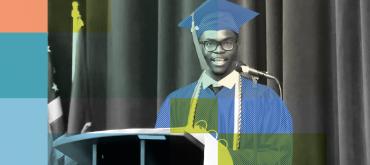
Especially at this moment—as we celebrate the Declaration of Independence, struggle to resist President Trump’s authoritarianism, and fight for working families to have a better life—civics education is crucial for accomplishing our shared goals, from protecting the right to vote to fully funding public education. The accountability movement sidelined civics education for far too long—but passionate advocates for civics have never given up, and they are finding new allies among our nation’s youth. Wanting to bring a student’s voice to this crucial issue, we spoke with Chris Kobara, a 2026 graduate of the Urban Assembly Early College High School of Emergency Medicine in New York City and a freshman at the University of Pennsylvania. In high school, Chris was a youth member of the DemocracyReady New York Coalition and was on Legal Outreach’s Civic Engagement and Social Justice Council. At Penn, he is studying public policy and governance.
–EDITORS
EDITORS: How did you become interested in civics?
CHRIS KOBARA: What drew me to civics education and advocacy was a program after eighth grade called the Summer Law Institute that my sister recommended. At the time, I wasn’t really interested, but I also didn’t want to follow my siblings into math and science. Now I’m very glad that she pushed me to do it. Run by a nonprofit called Legal Outreach, the institute introduced me to what lawyers do, and ever since I’ve been thinking about going to law school.
Since I liked that experience, I joined Legal Outreach’s four-year College Bound program and participated in its Civic Engagement and Social Justice Council. These programs offer supports like a summer writing course and gave me opportunities to do projects that are important to me, like highlighting issues affecting immigrant communities.
One experience that got me even more into civics education was a project in which we tried to get our classmates, 16- and 17-year-olds, to pre-register to vote. I gave the form to one student, and I noticed at the end of class that she had thrown it away. I wasn’t really mad about that so much as I was astonished. I couldn’t understand someone not wanting to vote.
My family is from Togo. My parents and siblings were born there, and I am the only one born in the United States. In Togo, we have dictators—there are elections, but they are not free or fair. Voting is a privilege, and the people of Togo certainly would vote if they could. So, it’s incredible to me that some people don’t vote in the United States, where we have more say in the policies and laws that impact our lives and our neighbors’ lives. I can’t imagine not voting.
For me personally, it’s really important to understand that democracy is not something we inherited. It’s something we continuously build. I know that especially because I’m from the Bronx, and I came to understand at a young age that opportunities, including educational opportunities, are often determined by zip code. I know it’s very important that everybody, no matter your age, find opportunities and seek education—especially civic education. How you participate really impacts your community. Voting and speaking out about issues you think are relevant to your community and to you personally are especially important. Our ideas and willingness to show up really do matter.
EDITORS: You’ve shown up through a variety of programs and projects. Tell us about one that has been particularly meaningful for you.
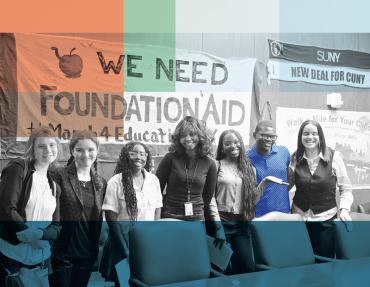
CHRIS: I spent the past few years as a youth member of the DemocracyReady New York Coalition because it focuses on increasing awareness of the importance of civics education, and because DemocracyReady’s leaders actually listen to young people. For example, one of the first things I did with them was an interview during its Second Annual Summit on Civic Readiness in March 2024. This webinar included the president of Teachers College, the chancellor of the State University of New York, and other important people—and my opinions were really valued.* People like that don’t often listen to young people like me, especially people who look like me and who come from immigrant families. It’s a big motivation for me to be able to reach folks like that.
DemocracyReady also motivated me to get more students engaged in civics. In my junior and senior years, I was part of a DemocracyReady cohort studying civics education in New York. We surveyed students and teachers across the state to learn about their attitudes toward civics and civic education and what resources they need. We learned all about their civic activism and what they care about. We had participants in the Bronx, the Hamptons, and upstate, so we got a lot of different perspectives. Unfortunately, we also found lots of inequities in terms of what opportunities students have to learn about civics.
For instance, my school doesn’t offer the Seal of Civic Readiness, which is a New York State Education Department program. Students earn points through courses, an exam, and projects, and then earn a distinction on their diplomas. I know about it because of my work with DemocracyReady, and I would have definitely participated if my school offered it. I think schools everywhere and students everywhere need access to programs like this to increase student engagement.
With DemocracyReady New York, we do a lot to spread the word about civic education and civic engagement. Most of our work is on Zoom, and so we host a lot of panels and webinars. Civics is important to us all, so our audience is students, teachers, parents, lawmakers—everybody. We want to make sure that everybody has access to civic education, and we want them to be engaged with whatever issues are important to them. Preparing students to participate in democracy is one of schools’ most important responsibilities.
EDITORS: Are you concerned about the health of our democracy?
CHRIS: Yes. A lot of people my age don’t care about politics or voting, but the decisions our leaders are making really impact us. Young people need to know that—and they need to know their rights.
I’m very concerned about the SAVE Act, which many Republicans in Congress support, as does President Trump. The SAVE Act would make people show certain forms of identification, like a birth certificate, to vote. It’s going to prevent a lot of people from voting—like if your name has changed, then you can’t use your birth certificate. Some people could use passports, but not everybody can afford to get a passport.
Making it harder to vote is really against the whole idea of this country. We should be helping everyone who is eligible to vote; we should be making it easier for them to vote.
Beyond voting, I’m concerned about Immigration and Customs Enforcement (ICE). I’m not concerned about my family because my parents and siblings are now citizens, but I’m really concerned about my neighbors in the Bronx. I have a lot of friends and neighbors who are absolutely terrified of ICE. If you can’t feel safe in your home and in your neighborhood, you can’t feel safe anywhere.
My passion for advocating for immigrant communities is what inspired my essay “The Man in the Tower,” which was selected for a special issue of the New York Public Library’s Teen Voices commemorating James Baldwin. When I heard about the request for submissions to the issue, I had just learned about Baldwin in an English class. His advocacy and especially his essay “A Letter to My Nephew” really struck me. For my essay, I wanted people to know about the immigrants who helped build this country and help keep it running every day—like the people who deliver food in the snow and take care of rich families’ children. Immigrants are everywhere, but people really don’t appreciate their contributions.†
I’m also concerned about how much more divided people are with the rise of AI, social media, and misinformation. People don’t know what is real. Even my mom was looking at something on WhatsApp, and she didn’t know how to figure out whether it was true or not. I think that is a big contributor to apathy and low voter turnout. We need more education on misinformation. It’s easy to read the heading of an article and believe everything the article says. But unless you know the sources, you could be easily influenced and then share misinformation. You have to do your own research.
With AI, the environment is a concern too. It uses a lot of water and electricity. One of my hopes for the future is that my generation, 5 or 10 years from now, will be using a lot less AI.
I’ve been thinking about all of these concerns, and more, with the 250th anniversary of the Declaration of Independence. I’ve been reflecting on the values in the Declaration and the ways that we still need to realize them today. There’s so much in the Declaration about equality that isn’t true in America yet, especially for people who look like me and people of other minority groups. But I still value the document, and I think we should continue to work toward it.
EDITORS: What gives you hope?
CHRIS: What gives me hope is seeing how my generation is really advocating for change. Last spring, high school students all across the country did a walkout to protest ICE and how it’s terrorizing communities. Apathy is a problem among some young people, but not all. There’s a whole movement of people who can’t even vote yet but who know how important civics is and how important it is to get involved in our policies and laws. The laws that our leaders are making affect us too, so our voices matter—and it’s so important for adults to listen to youth.
What I’d like to see over the next five years is a lot more activism among 18- to 23-year-olds. A lot more voting, spreading the word, advocacy work. Even if it’s between elections or even if you can’t vote yet, you can get out on the street and engage in a protest; make sure that people know what you value.
I think civic education really empowers people to actively participate in their communities, so I would encourage everybody to educate themselves. Know your rights and responsibilities as a citizen. Know democratic processes so you can get involved and encourage the people around you to advocate for positive change in our society.
*To watch this webinar, visit here. (return to article)
†To read “The Man in the Tower,” visit here. (return to article)
[Photos courtesy of Chris Kobara]