 Member Benefits
 How to Join
 En Espanol
Attendees at the Higher Education breakfast were treated to an inspiring conversation with Dominique J. Baker, associate professor of education and public policy at the University of Delaware and member of the University of Delaware AAUP. Baker spoke with AFT-Wisconsin President Jon Shelton about the Trump administration’s efforts to gut higher education and what unionists can do to meet the moment on college campuses.
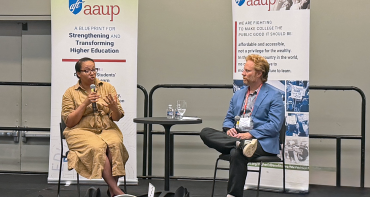
Shelton began by asking Baker what we should expect from a Trump administration that is committed to censoring higher education. According to Baker, we need to simplify the issue. We have had some successes—like the AFT’s lawsuit preventing the elimination of diversity, equity and inclusion practices—but we must remember that the administration is pursuing specific goals, namely the resegregation of higher education and greater stratification of institutions. One tactic might not work, but we can expect this administration to continue trying new techniques, seeing what works and revamping as needed.
But what Republican extremists have been able to achieve over the last several years, particularly overturning affirmative action in 2023, has been devastating. Baker noted that the Supreme Court decision didn’t only affect admissions and enrollment. It also means fewer scholarships and supports for students of color. Many state attorneys general have advised institutions to end scholarships for minority students because of that ruling, and many institutions have followed suit. The most likely outcome is that selective institutions will become much whiter, while students of color will be concentrated in open-access institutions that will simultaneously be starved of money and resources to serve those students. “These aren’t unintended consequences. They’re exactly what is supposed to happen,” Baker said.
Shelton then turned to the practical side, asking how we fight back. According to Baker, it’s essential to identify those on campus who have become more interested in collective action as academic freedom has come under attack. We need to educate them and give them concrete things to do, like submitting public comments on proposed federal rules about research funding. And we need to build coalitions with student groups, other unions and our communities. Baker challenged attendees to join her in the work of undoing the damage to higher education, no matter how long it takes. “I believe hope is a practice,” Baker said. “I may not see [that freedom] in my lifetime, but that doesn’t mean my work or my peers’ work doesn’t matter, and it doesn’t mean that I give up.”
[Sharone Carmona/Photo credit: Pulin Modi]