 Member Benefits
 How to Join
 En Espanol
Student debt: The hidden affordability crisis
This is a five-alarm fire exacerbating America’s affordability crisis.
Summer should be a time to take a well-earned vacation and enjoy being with family and friends. But for millions of Americans, summer arrived with a surprise bill from President Donald Trump and Education Secretary Linda McMahon that jacks up their student loan payments.
Hidden in Trump’s so-called Big Beautiful Bill were several cruel and costly student loan provisions that went into effect on July 1. This “revamping” of the federal student loan system forced borrowers into expensive repayment programs. And for what? To pay for the president’s $1 trillion in tax breaks for the wealthy and big corporations. The average family will now pay $4,000 more on their loans at a time when most are barely getting by.
This week I heard from an AFT member in Texas whose student loan payments jumped from $150 a month to over $1,200. With costs on everything increasing, how can any working person suddenly afford a new recurring expense like that?
A special education teacher in Wisconsin shared that her loan payments increased by five times what she was paying before Trump’s loan changes. She’s had to take on a second job delivering food and other items through Door Dash. But that extra income she needs to barely make ends meet will also increase what she pays in student loans. She says she feels like she’s living worse off now than when she first started teaching.
Lawmakers should be working to make life and college more affordable and ease the burden of student loan debt. Instead, Trump is crushing more people under higher levels of debt and pushing college further out of reach for many. And he’s doing all of this to help the rich get even richer.
For decades we told high school students to go to college. It was a bipartisan value. With college tuition skyrocketing, most working- and middle-class people turned to loans to pursue their dream careers and a better future. Today, 44 million Americans have student loan debt, totaling $1.7 trillion. And, even before July 1, paying down this debt was already unsustainable for many, with more than 3.6 million people defaulting on their loans since Trump took office.
Trump’s Big Beautiful Bill hits borrowers on multiple fronts. It forces borrowers into new repayment plans with higher monthly payments. And it makes these more expensive plans the only pathway available for those seeking Public Service Loan Forgiveness, which cancels the remainder of student loan debt, after a decade of making payments, for those who work in public service. Now teachers, nurses, police officers, firefighters and military service members will pay more on their student loans before they get debt relief.
The bill also limits access to federal student loans for graduate education and unlawfully lowers loan limits for teachers, health professionals and others pursuing advanced degrees to serve their communities.
This is a five-alarm fire exacerbating America’s affordability crisis. And it demands action now.
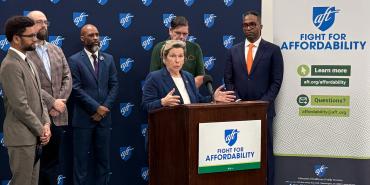
To fight Trump’s costly student loan changes, the AFT has joined labor, consumer and borrower protection groups for a new campaign to galvanize student loan borrowers to share their own “One Big Bill” stories detailing what these policies are costing them and calling for action. You can share your story at protectborrowers.org/one-big-bill.
The AFT supports legislation to cap interest rates and ease the burden of student debt for working people. But it’s this Congress, at the direction of Trump, that inflicted this student loan pain on Americans, and it remains unwilling to fix it. That’s why we need to elect new leaders in November who will enact an affordability agenda that addresses these student loan hikes and brings down costs on food, healthcare and other basics.
We’re also taking the Trump administration to court again. The AFT joined a coalition of unions challenging the administration’s draconian new limits on federal student loans for graduate education and its unlawful exclusion of certain workers from the higher caps it has set for other professional students. By de-professionalizing nursing, architecture, social work, teaching and other careers, the administration is eviscerating education access for poor and working-class students and their families and dismantling pathways to the middle class.
We are not newcomers to this fight for real relief for student loan borrowers. Through our advocacy, the AFT has helped more than 1 million borrowers get $78 billion in student debt forgiven. And we continue to offer borrowers access to free online student debt clinics to help people navigate their student loan options and qualify for Public Service Loan Forgiveness.
But more must be done now. For generations, higher education has offered people a pathway to opportunity and a better life. No student loan bill should lock people in a “debt sentence” or make it harder for them to put food on the table, put gas in their cars and afford the basics their families need. And the student loan system shouldn’t be weaponized by a president using hardworking Americans to line the pockets of the wealthy.